


Member states must advance concrete measures to protect access to medical care in conflict zones.
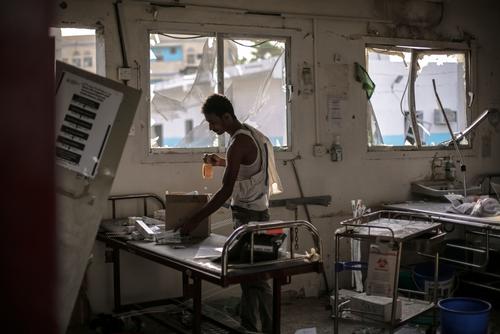
After conducting internal investigations, Médecins Sans Frontières (MSF) is releasing two reports describing attacks on medical facilities it runs or supports in Yemen. The two attacks combined resulted in the death of 20 people, most of them patients, and wounded 32 others. Both attacks were acknowledged by the Saudi-led coalition (SLC). The attacks were on a hospital in Abs, Hajjah governorate on 15 August 2016, and on the MSF clinic in Taiz city on 2 December 2015. The reports detail the actions taken before, during and immediately after the airstrikes. MSF is engaged with the military leadership of the SLC and have raised our serious concerns about the attacks.
Beyond the immediate loss of life and destruction caused by the bombings, the attacks led to a suspension of activities that left an already very vulnerable population without access to healthcare. As a consequence of the bombing of Abs hospital, MSF withdrew from six hospitals in northern Yemen.
While there are significant differences in the circumstances surrounding each incident, in both cases, the bombings hit fully functioning health facilities and the protected nature of the medical mission was not respected. The internal investigations of the Abs and Taiz incidents also conclude that the neutrality and impartiality of the facilities had not been compromised before the attacks and therefore there was no legitimate reason to attack them. The details of the incidents documented in these two reports are unambiguous indicators of how war is being waged in Yemen, where there is an utter disregard for civilian life by all warring parties.
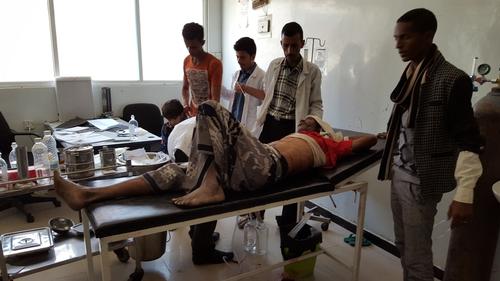
UN Security Council (UNSC) resolution 2286, passed last May, condemned attacks on medical facilities in conflict situations and demanded that all parties to armed conflict comply fully with their obligations under international law. However, there have been no concrete and visible steps to materialise the resolution’s underlying intention. MSF urges UNSC members to take bold and practical steps in tomorrow’s meeting to ensure that 2016 is the last year that hospitals are massively bombed while the world watches in silence. MSF reiterates its call for all warring parties to uphold the principles of humanitarian law, which protect civilians as well as medical facilities, patients and staff, and thus reduce the massive human cost that has characterised this conflict.
MSF first worked in Yemen in 1994. With the escalation of conflict early 2015, causing a dramatic increase in humanitarian and medical needs, MSF scaled up the response, and its operations in Yemen are presently the organisations’ third largest worldwide.
Before 15 August 2016, MSF had been working in 11 hospitals and health centres in Yemen and providing support to another 18 hospitals or health centres in eight governorates (Taiz, Aden, Al-Dhale, Saada, Amran, Hajjah, Ibb and Sanaa), with more than 2,000 MSF staff in the country, including 90 international staff.